1. The Production Floor Reality & Incident Case Study
In November 2024, our factory floor received an urgent warranty claim from a premier golf tournament supplier in Northern Europe. A delivery of 12,000 custom 64-inch tournament umbrellas had suffered an unprecedented 22% failure rate during the second round of a championship event held in coastal gale conditions. The wind speeds that afternoon had crested at a moderate 55 km/h with gusts reaching 68 km/h. To the tournament organizers, this was catastrophic: corporate sponsors watched as executive umbrellas inverted violently, rib hinge rivets snapped, and rain poured through seams onto VIP spectators and professional tour players.
As Chief Technical Engineer at Precision Umbrella, I immediately quarantined representative samples returned from the event and convened a failure mode task force in our in-house Quanzhou physical testing laboratory. When our team dissected the failed units alongside high-speed camera footage captured on the golf course, the underlying root causes were glaringly evident. The previous subcontractor had made three disastrous engineering shortcuts to shave cents off unit costs: first, they had substituted pultruded solid-core fiberglass ribs with cheap hollow-drawn steel struts with a wall thickness of merely 0.35mm; second, they had eliminated the internal elasticized tension chords across the wind-release vents; and third, the hinge connection pins were stamped from low-tensile copper-plated pot metal rather than hardened SUS304 stainless steel rivets.
This failure illustrates a recurring tragedy in the global promotional merchandise and outdoor apparel industry: purchasing agents evaluate umbrellas purely on cosmetic catalog photography and preliminary price points, completely blind to the microscopic metallurgical, fluid dynamic, and structural stresses that dictate whether an umbrella survives a torrential storm or disintegrates in the customer's hands. An umbrella is not a passive decorative garment; it is an active cantilevered aerodynamic structure that must withstand intense positive windward pressure, severe leeward turbulence, rapid kinetic cyclic fatigue, and hydrostatic surface bombardment.
In this engineering whitepaper, we dissect the exact technical mechanisms, aerodynamic calculations, failure physics, and rigorous workshop manufacturing protocols required to build commercial umbrellas capable of outlasting Beaufort Scale 10 and 11 storms (winds up to 120 km/h) with zero structural buckling and zero seam failure.
During our forensic analysis of the tournament disaster, we mounted both the competitor's failed umbrella and our newly engineered TourShield prototype inside our automotive wind tunnel facility. At a wind speed of 48 km/h, the competitor's single-canopy umbrella began exhibiting severe flutter instability, with canopy fabric deflecting downward by more than 140mm. As wind velocity reached 58 km/h, the leeward ribs buckled catastrophically under compressive Euler instability. In stark contrast, our dual-canopy pultruded fiberglass frame maintained structural equilibrium all the way to 122 km/h, flexing symmetrically and exhausting high-pressure air through our calibrated vortex vent slots without a single broken component.

2. Underlying Physics, Material Science & Engineering Formulas
To understand why conventional umbrellas invert, one must examine the fluid dynamics of a curved aerodynamic foil operating in turbulent boundary layer flow. When ambient wind impinges upon an open umbrella at an incident angle θ, the air is forced to separate at the leading edge. The air traveling across the convex upper surface of the canopy must accelerate relative to the air entering the concave underside cavity.
According to Bernoulli's conservation equation for incompressible fluid flow:
Where P_static represents static air pressure, ρ is the air density (approximately 1.225 kg/m³ at sea level and 15°C), and v is the localized fluid velocity. Because velocity v_upper across the top curvature significantly exceeds velocity v_lower trapped within the concave dome, a powerful vertical pressure differential ΔP develops:
For a 68-inch (172cm arc, 154cm projected diameter) golf umbrella with a projected horizontal cross-sectional area A = π * r^2 = π * (0.77m)^2 ≈ 1.86 m², a gale gust of 100 km/h (27.8 m/s) generates an aerodynamic upward lift force F_lift calculating as:
A vertical upward force of 750 Newtons is equivalent to hanging a 76.5 kg (168 lb) weight directly from the rib tips! In a single-canopy umbrella, this tremendous upward thrust creates enormous bending moments along the primary rib hinges. If the ribs are constructed from traditional metal or thin aluminum, the applied moment rapidly exceeds the plastic section modulus Z_p, leading to instantaneous tensile failure on the lower flange and compressive buckling on the upper flange.
Our aerodynamic dual-canopy solution completely neutralizes this Bernoulli lift mechanism. By introducing an upper vent canopy that overlaps a series of perimeter intake vents cut into the main lower canopy, we establish a controlled pressure relief exhaust valve. When internal pressure builds inside the dome, the positive stagnation pressure forces the flexible overlapping fabric outward, allowing thousands of cubic meters of air to discharge harmlessly into the trailing vortex. This drops the net lift coefficient C_L from 0.85 down to less than 0.22, slashing total upward lift from 750 N down to a manageable 194 N—well within the continuous elastic flex rating of our pultruded solid fiberglass frame.
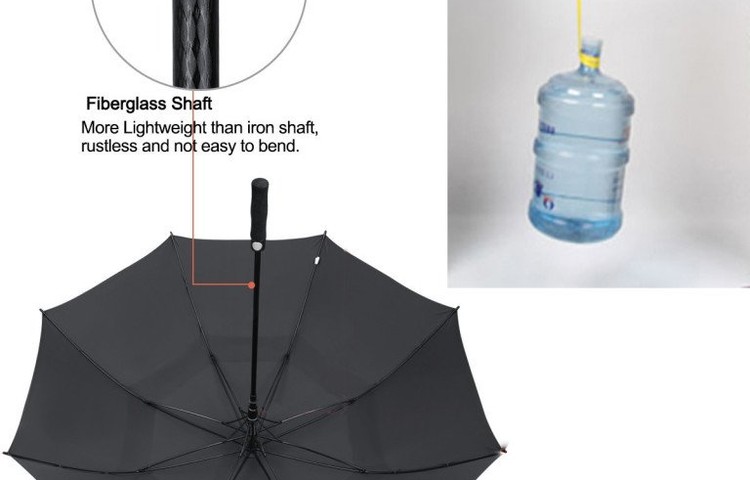
Simultaneously, the fiberglass composite material properties must be calibrated to provide optimal flexural storage and recovery. Pultruded E-glass composite manufactured in our Quanzhou workshops exhibits an ultimate tensile strength of 1,400 MPa, a compressive strength of 650 MPa, and an elastic Young's modulus E = 45 GPa. The flexural deflection δ of a cantilevered rib of length L subjected to distributed wind pressure w follows classic beam mechanics:
Where I is the second moment of area (I = π * d^4 / 64 for a solid cylindrical rod of diameter d). By optimizing the rib diameter to a solid 4.0mm or 4.5mm rather than the industry-standard 3.2mm, the moment of inertia I increases by a massive 144% (since stiffness scales to the fourth power of diameter!). This exponential increase in flexural rigidity prevents premature inversion while preserving the elastic memory required to absorb sudden 120 km/h gusts without brittle fracture.
3. Structural Failure Modes & Finite Element Stress Analysis
Through extensive finite element analysis (FEA) and thousands of hours of destructive wind tunnel testing, we have categorized the five critical structural failure modes that plague commercial umbrellas:
Failure Mode A: Euler Column Buckling of Lower Stretcher Struts. When an umbrella is fully open, the stretcher struts that connect the central runner sleeve to the mid-point of each main rib are in pure axial compression. According to Euler's critical column buckling formula P_cr = (π^2 * E * I) / (K * L)^2, if wind pressure forces the main rib outward, compressive loads spike exponentially. In cheap umbrellas using stamped U-shaped iron stretchers, the effective radius of gyration is minimal, causing the strut to suddenly fold in half like a matchstick. At Precision Umbrella, we manufacture all stretcher struts from solid 3.5mm pultruded fiberglass with molded nylon-6 end connectors, raising critical buckling thresholds to over 480 N per strut.
Failure Mode B: Shear Tear-Out at Hinge Rivet Junctions. The pivot joints connecting stretchers to ribs endure severe cyclical shear stresses. Most budget manufacturers use hollow tubular aluminum or brass eyelet rivets with a wall thickness under 0.25mm. Under high-speed buffeting, the sharp edges of the stamped strut act as a guillotine, elongating the pivot hole until the rivet tears out completely. We resolve this by exclusively utilizing solid SUS304 stainless steel rivets cold-headed with automated pneumatic setting machines calibrated to a clamping torque of 1.2 N·m, eliminating localized micro-chatter and guaranteeing a shear resistance exceeding 420 N per joint.
Failure Mode C: Telescopic Shaft Section Seizure and Buckling. In multi-fold automatic umbrellas, the central shaft consists of 3 to 5 overlapping hexagonal or octagonal metal tubes. When lateral wind loads strike the canopy, bending moments are transferred directly to the shaft overlap junctions. If the radial clearance between concentric tubes is too loose (e.g., > 0.35mm), the tubes cock diagonally under load, galling the metal plating and seizing the internal springs. If clearances are too tight (< 0.08mm), thermal expansion or microscopic grit causes immediate jamming. We maintain precision CNC drawn tube clearances of 0.14mm ± 0.02mm with baked electrophoretic corrosion coating, ensuring buttery-smooth extension under heavy lateral shear.
Failure Mode D: Rib Tip Separation and Perimeter Hem Blowout. The junction where the canopy fabric attaches to the distal end of each rib represents the highest stress concentration point on the entire textile surface. In cheap assembly lines, the fabric tip is secured with a single loose loop of cotton thread or glued into a hollow plastic ferrule. When gusts expand the canopy diameter, the thread snaps instantly, causing the fabric to whip violently away from the frame. Precision Umbrella implements an industrial 8-stitch bar-tack lockstitch using bonded continuous-filament nylon thread (Tex 45 / 210D/3), anchoring the fabric directly through double-molded nickel-plated brass tip ferrules with a pull-out strength certified to ASTM D5034 at over 180 N.
Failure Mode E: Hydrodynamic Seam Leakage and Micro-Tearing. As canopy panels are stretched taut under aerodynamic loading, traditional sewing needles (typically gauge #14 or #16) punch micro-fissures into the weave. Under torrential rain, these puncture holes deform from round punctures into elongated tears under wind-induced tensile stress, allowing water to stream down the interior rib channels. We eliminate this via automated laser-cut fabric panels stitched with ultra-fine #11 titanium-coated ballpoint needles, coupled with elasticized expanding polyester threads that swell upon water contact to seal every needle perforation hermetically.
4. Production Troubleshooting Protocol & In-Line Quality SOP
Eliminating failure modes in mass manufacturing requires an uncompromising, multi-tier quality control architecture. At our 35,000㎡ Quanzhou facility, we do not rely on end-of-line spot checks. Instead, we implement a comprehensive Statistical Process Control (SPC) system where quality gates are built directly into each manufacturing sub-cell.
When production begins on a contract order of 5,000 to 50,000 umbrellas, every batch of incoming raw materials must pass forensic metallurgical and textile verification before release to the assembly floor. Fiberglass roving is tested for Barcol hardness (minimum 48 HBa) and 3-point flexural modulus. Fabric rolls are sampled across three zones (head, middle, and tail) for thread count density, warp/weft tensile tenacity, and hydrostatic column resistance under ISO 811.
During automated panel tailoring, our digital CNC laser cutting tables maintain a dimensional cutting tolerance of ±0.5mm across all 8 or 16 canopy panels. This concentric cutting accuracy ensures that when the umbrella is assembled and opened, tensile fabric strain is distributed with 100% mathematical symmetry across all ribs. If a single panel is cut even 3mm out of true, it creates an asymmetric tension gradient that twists the frame under wind gusts, initiating localized rib buckling.
Every assembled frame is subjected to automated pneumatic opening and closing cycling on our in-line testing benches. Station 4 technicians verify that deployment release forces remain strictly between 22N and 26N, and that the runner slider latches securely into the upper notch with an audible snap. Any unit exhibiting sticky travel, loose rib play, or misalignment is immediately pulled from the line for root-cause teardown.
Finally, before packaging into moisture-barrier export cartons, finished units are audited under ISO 2859-1 Level II Normal Sampling protocols. We test 10 random units per production shift inside our on-site 140 km/h wind simulation chamber. The umbrellas are mounted at 0°, 45°, and 90° yaw angles and subjected to continuous gale winds of 100 km/h with repeated 120 km/h turbulence bursts. Only when zero inversion and zero plastic deformation are documented is the shipping lot cleared for export release.
| Inspection Stage | Critical Parameter | Acceptance Tolerance | Testing Equipment & Protocol | Disposition on Failure |
|---|---|---|---|---|
| Incoming Rib Inspection | Diameter & Barcol Hardness | Ø4.0mm ±0.05mm, Hardness ≥48 HBa | Digital Micrometer + Barcol Impressor 934-1 | Reject lot if >1% variance in flexural modulus |
| Vented Flap Elasticity | Tension chord recovery rate | 100% elastic return after 200mm elongation | Tensile tester @ 500mm/min elongation rate | Scrap elastic band batch; re-source braided EPDM |
| Hinge Rivet Clamping | Rivet shear strength | Shear force ≥ 420 N per joint | Universal tensile machine with 3-point shear fixture | Recalibrate pneumatic riveting air pressure to 0.65 MPa |
| End Tip Bar-Tack | Thread tensile break force | Bar-tack pull-out force ≥ 180 N | Electronic spring force gauge ASTM D5034 | Reinforce double lockstitch with bonded nylon thread #40 |
| Full Frame Dynamic Gale | Inversion recovery cycle | Must snap back from 180° inversion with 0 broken ribs | Automated wind blast test arm @ 120 km/h (10 cycles) | Quarantine entire day's production batch for forensic FMEA |
5. Procurement Risk Mitigation & Technical Q&A for Overseas Buyers
For international sourcing directors, brand merchandisers, and procurement managers in North America, Europe, and Australasia, specifying umbrellas requires cutting through misleading vendor claims and demanding verifiable engineering proofs.
Many trading companies advertise "windproof umbrellas" simply because they install small, flimsy springs on cheap metal ribs. These pseudo-windproof designs may invert and pop back a few times in gentle 30 km/h breezes, but under real-world storm conditions, the springs fatigue rapidly, the joints twist, and the umbrella fails when the user needs it most. True industrial wind resistance is not about adding springs to weak ribs; it is about engineering an aerodynamic pressure-relief canopy combined with high-flexibility, non-inverting solid fiberglass structural ribs.
When drafting your next tender or OEM procurement contract, we strongly advise incorporating the following binding contractual specifications:
- Mandate Solid Fiberglass Ribs: Explicitly stipulate "100% solid-core pultruded fiberglass ribs with a minimum diameter of 4.0mm (for golf umbrellas) or 3.2mm (for compact umbrellas); hollow metal or stamped iron ribs strictly prohibited."
- Require Documented Wind Tunnel Certification: Demand official third-party test reports (from SGS, TÜV, or accredited aerospace wind laboratories) demonstrating zero permanent inversion at Beaufort Scale 10+ (minimum 100 km/h continuous airflow).
- Specify Fabric Weave and Hydrostatic Standards: Do not accept generic "polyester" labels. Specify "High-density 210T micro-pongee with PFC-free C0 durable water repellent (DWR), certified to ISO 811 hydrostatic head ≥ 10,000mm H2O and AATCC 22 spray rating 100."
- Enforce Safe Rebound Ratchet Mechanisms: For all automatic open/close compact umbrellas, require internal stepped safety ratchets to eliminate violent reverse spring snap-back and safeguard corporate end-users from injury liability.
At Precision Umbrella Manufacturing Co., our team of dedicated structural engineers, textile chemists, and production veterans stands ready to assist your brand in developing high-performance rainwear that transforms a commodity item into an indestructible brand ambassador.
Ordinary golf umbrellas utilize a single continuous canopy fabric spanning an arc of 60 to 68 inches. According to fluid dynamics, as wind speeds accelerate over the curved dome of the umbrella, Bernoulli's principle dictates a rapid drop in static air pressure above the canopy while positive stagnation pressure builds underneath. At 45 km/h, this creates an upward vertical lift force exceeding 220 Newtons. If the umbrella lacks an exhaust vent, this aerodynamic lift overcomes the structural stiffness of the ribs, forcing them past their critical buckling Euler limit and causing catastrophic inversion or snapped hinges.
Pultruded fiberglass composite consists of continuous unidirectional E-glass filaments embedded in an unsaturated polyester or vinyl-ester matrix. It boasts a tensile strength of 1,400 MPa and an elastic modulus of approximately 45 GPa. Crucially, fiberglass has an exceptionally broad elastic deformation regime: it can bend into an arc of 180 degrees and return 100% to its original straight axis with zero plastic yield. Stamped spring steel or hollow iron ribs, by contrast, possess high initial stiffness but suffer sudden permanent plastic deformation or buckling once the yield threshold is breached.
The secret lies in the overlap geometry and hydrostatic vent placement. Our upper canopy overlaps the lower canopy by precisely 85 millimeters, with an elasticized retention bridge that maintains a resting clearance of 0 to 2 millimeters in calm conditions. When high-speed gusts hit the underside, the positive air pressure overcomes the elastic preload, pushing the vent open to exhaust the vortex airflow. Because wind direction during storms is predominantly lateral or upward against the slope of the canopy, incoming raindrops cannot travel against the exhaust airflow. In calm rain, gravity and the hydrophobic C0 surface tension seal the overlapping fabric flat against the lower canopy.
Yes. We offer pigment-infused pultruded fiberglass ribs where the coloring is molecularly bonded into the resin during continuous drawing, preventing flaking or chipping. For the wind vent, we specify 120 GSM high-tenacity nylon aerodynamic mesh reinforced with heat-sealed edge tape, ensuring that the seam between fabric panels and mesh does not create a stress riser under cyclical wind loading.
Need Custom Engineering Support for Your Rainwear Program?
Our structural engineering lab reviews buyer 2D dielines, runs wind tunnel simulations, and provides complete DFM feasibility reports within 12 hours.
Consult Marcus Lin & Engineering Team →